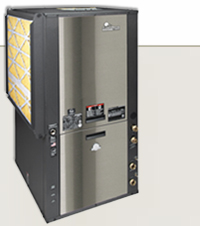

FACT: Geothermal systems provide the most efficient, comfortable and environmentally friendly method of heating & cooling.
Blog
How the Inflation Reduction Act Rewards Homeowners and Businesses for Installing Geothermal Heating Equipment

Americans hold mixed views on how the federal government should reduce climate change, but the majority also believe the government isn’t doing enough to protect the planet.1 That was part of the sentiment measured in a July 2022 Pew Research Center survey before President Joe Biden signed the Inflation Reduction Act into law on August 16, 2022. The Act offers relief mechanisms to lower healthcare and prescription costs, make the tax code fairer, build a clean energy economy, reduce energy costs, and reduce pollution.
The Act marks the largest investment in tackling the climate crisis in U.S. history. One of its primary goals is to reduce greenhouse gas (GHG) emissions by roughly 40% below 2005 levels by 2030. Since the production and use of energy account for the most significant contribution to GHG emissions, the government is offering rebates and tax incentives that will make energy-efficient measures more affordable. The implementation of these technologies will reduce the amount of climate-warming emissions, bringing us closer to meeting the nation’s decarbonization goals.
The clean energy package includes billions of subsidies that will directly benefit Americans and businesses. Geothermal heat pumps are recognized as a sustainable alternative to burning nonrenewable resources. Here we explore why using geothermal heat pumps reduces carbon footprints and how homeowners and businesses can benefit from the Inflation Reduction Act’s financial incentives.
Why is geothermal heating more environmentally friendly?
Traditional heating and cooling approaches take air from the outside, using fossil fuels to heat it up or cool it down.
Geothermal heating and cooling harnesses stable temperatures from the earth itself. Regardless of where you live, the temperature underground stays at around 55 degrees Fahrenheit year-round. A geothermal system uses a loop of pipes buried into the ground. A solution of water and environmentally safe antifreeze is pumped into through these pipes, with the ground loop forming a heat exchanger used by the geothermal system to heat and cool a home.
While gas furnaces burn natural gas and are 98% efficient, geothermal systems use significantly less energy, achieving 400%-600% efficiencies and saving homeowners up to 70% on heating, cooling, and hot water costs.